Description
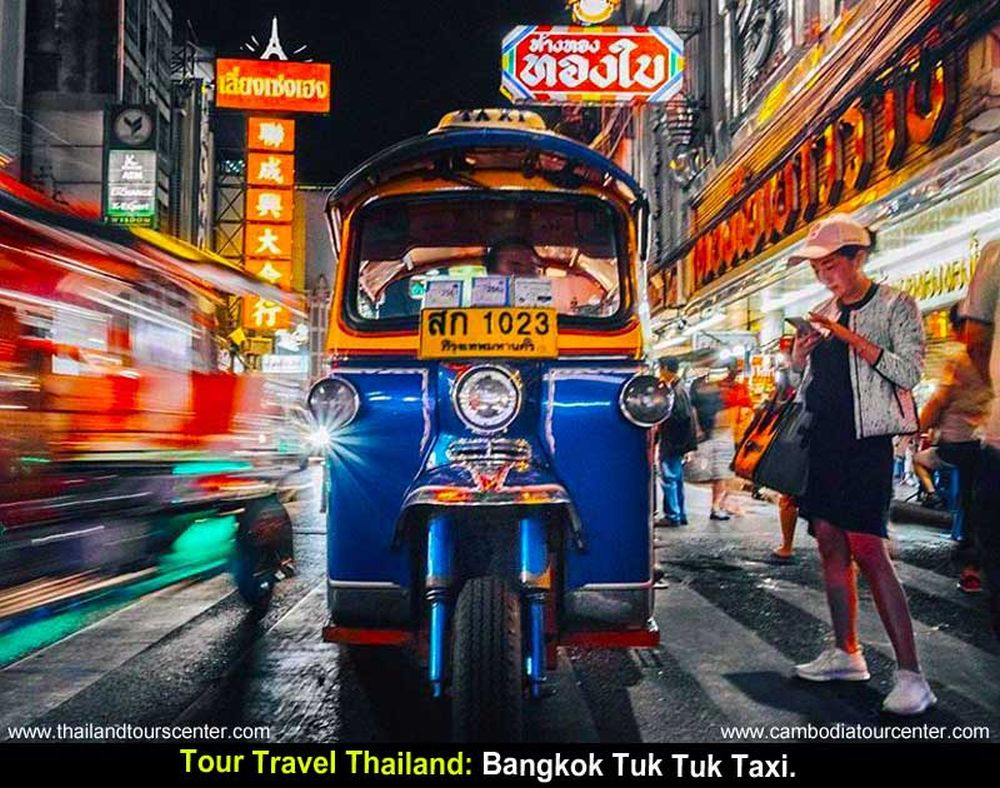
This Bangkok Tour by Tuk-Tuk is one of the “must-do’s” and surely the best and most entertaining way to see.
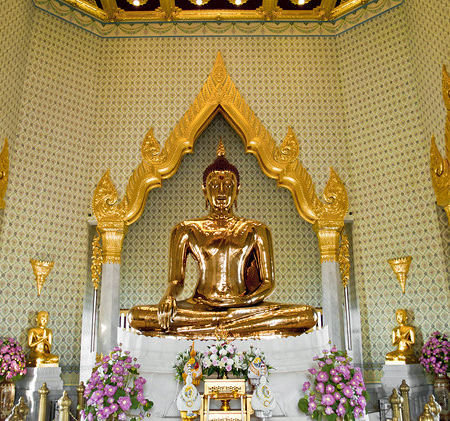
Discover Bangkok’s most authentic urban life, transported by your own open-aired 3-wheeler tuk-tuk and your private driver. En route the iconic landmarks of Bangkok, at Kuan Yim Shrine, Chinatown, The Grand Palace (outside), Wat Pho (outside), The Metal Castle Temple (outside), The Democracy Monument, The Golden Mountain (outside), The Giant Swing, Khao San Road and Pak Khlong Talat Thailand’s biggest Flower Market.
We’ll take care of you so you can relax and enjoy the ride. We’ve got you covered, with private transfer pick up and drop off from your hotel in Bangkok. This Small-Group Tour starts every day with pick up from your hotel in Bangkok and we send you back to your hotel after the tour as well.
 Facebook Thailand Tours Center click on here.
PRICE for all Private Tours Includes :
- Private Tuk Tuk with driver.
- Transfer from / to Hotel.
Does not Include :
- Lunch & Dinner.
- English Speaking Guide.
- Admission fees to various places.
- Items of a personal nature.
- Tips or Gratuities to Guides or Drivers.
- Personal expenses such as drinks, insurance, tips for driver, etc.
- Other service not mentioned on this program.
If you need any additional information, Please contact us or WhatsApp. +66 8704 040 43 / +66 8900 500 90
This tour needs to be pre paid, as we have to pre pay the Sanctuary to secure your place.
A cell number if you have one with you when you get to Bangkok.
Warning Tips..It can be hot our there! Thailand is very hot. Please bring plenty of bottled water, sun screen etc.
Don’t forget to bring a cap, towel, sun glasses, energy drinks, etc.
Take special care of camera equipment make sure battery is full charged.
It’s easy to trip and drop a camera. Always keep back up SD cards and back up your photos.
Itinerary
Pick up from your hotel in Bangkok. Your private Tuk Tuk driver will come to your hotel and meet you in the lobby.
You will then be transferred by tuk tuk to the tours starting point :
- Kuan Yim Shrine, located in the old Bangkok’s China Town district. This is the colorful Kuan Yim shrine of the Thian Fa Foundation. The shrines’ walls are adorned with colorful murals. Inside is a small golden image of Guanyin. 12th Century Guanyin image. The shrine is dedicated to Guanyin, in Thailand also known as the Bodhisattva Phra Avalokitesuan. The Guanyin images dates to the 12th century. Carved from teak wood in the Tang dynasty art style, it is painted in gold color. With her right-hand Guanyin makes the Varada mudra, the gesture of charity or making offerings. The image was brought over from China and enshrined in 1958.
- Yaowarat or Dragon street, is certainly one of Bangkok’s most vibrant neighborhoods. Bangkoks giant Chinatown throbs and bustles, and is one of the city’s most interesting places. Yaowarat Road also has many narrow busy side streets/streets with food stalls.
After that we will go to the historic Rattanakkosin Island area and enjoy some great sights.
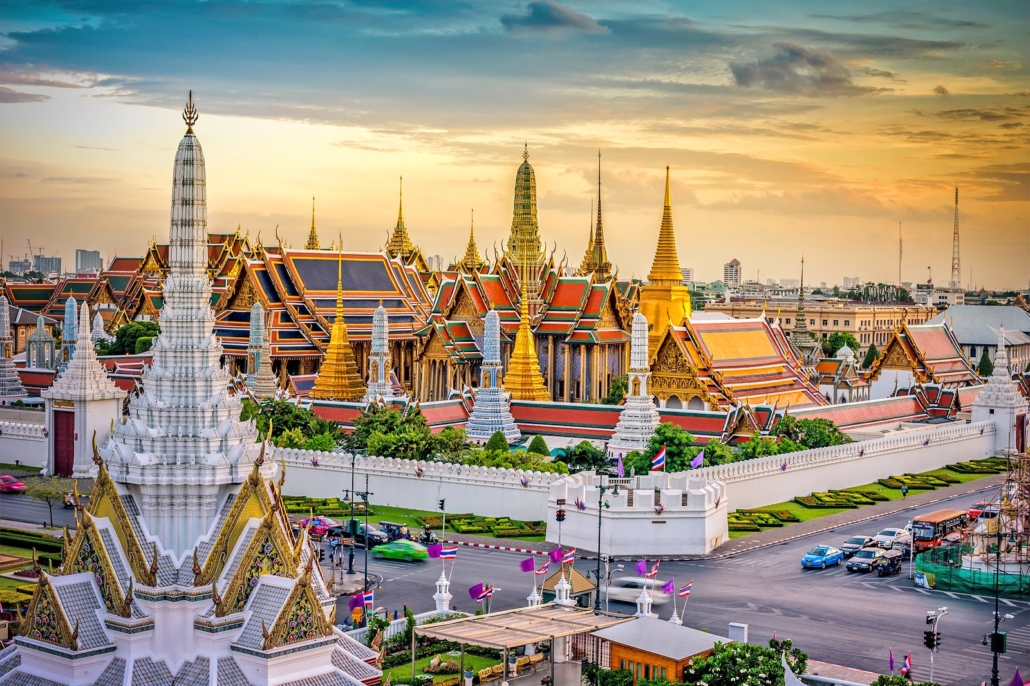
- The Grand Palace, In 1782 the new King decided to move the capital city to the left bank of the Chao Phraya River for strategic purposes and used the canals to the west as defenses for the new city. A palace was constructed whose grounds currently covers an area of 218,000 square metres that are enclosed by crenellated walls measuring 19,000 metres. Similar to palaces in the former capitals of Sukhothai and Ayudhaya this palace is also laid out with Halls of Residence and Throne Halls as well as administrative buildings and a temple that serves as the Chapel Royal, the Temple of the Emerald Buddha.
- Wat Pho (The Temple of the Reclining Buddha) or Wat Phra Chetuphon, is right behind the Temple of the Emerald Buddha – it’s a must-see for any first-time visitor to Bangkok. As one of the largest temple complexes in the city, it’s famed for its giant reclining Buddha that is 46 meters long, covered in gold leaf. Wat Pho is also a great place to get a traditional Thai massage. It’s often considered the leading school of massage in Thailand, so you really are in good hands here.
- The Metal Castle, The Wat Ratchanadda is a Royal temple best known for the Metal Castle, a very unique structure on the Bangkok skyline. The square building is called the Metal Castle because it has 37 cast metal spires, signifying the 37 virtues for enlightenment. It was built for the monks to practice and do meditation in the temple. At the ground floor level you will find a great number of columns that support the towers creating a labyrinth like environment.
- The Democracy Monument, This Bangkok monument commemorates the Siamese Revolution of 1932, the catalytic event that led Thailand to become a constitutional monarchy. At the center of the monument sits a sculpture of a manuscript box holding the Thai Constitution; it is guarded by four massive wings that represent the Thai air force, army, navy, and police. The six gates of the turret represent the six proclaimed policies of the Phibul regime: “independence, internal peace, equality, freedom, economy and education.”
- The Golden Mountain, Wat Saket, also known as The Golden Mount, is a popular Buddhist temple located in the heart of Bangkok, Thailand. Situated atop a man-made hill, it offers breathtaking panoramic views of the city and its surroundings. The temple is famous for its golden chedi, or stupa, which shines brightly in the sunlight, making it a prominent and revered landmark. When you are planning Bangkok tours, don’t forget to visit Wat Saket. This landmark, on the only hill in Bangkok, is of great significance for all followers of The Lord Buddha. 320 stairs take you up to the top for panoramic views of the Rattanakosin Island.
- The Giant Swing, locally known as “Sao Ching Cha,” is a religious structure and one of the most iconic landmarks in Bangkok, Thailand. It is located in front of the Wat Suthat temple, in the heart of the city’s historic district. The Giant Swing was originally constructed in 1784 by King Rama I, and it stands over 21 meters tall. This red, teakwood frame was once used in an old Brahmin ceremony, which is no longer practiced due to its dangerous nature. Despite the discontinuation of the swing ceremony, the Giant Swing remains an integral part of Bangkok’s cultural landscape. It underwent a major restoration in 2005, replacing much of the original teak wood with a more durable golden teak. Its unique design and vibrant red color make it stand out among the city’s many attractions. Surrounded by other historical sites, including the Grand Palace and Wat Pho, the Giant Swing offers visitors a glimpse into the city’s past, making it a must-visit destination for anyone traveling to Bangkok.
- Khao San Road, is a famous tourist street in Bangkok, Thailand, known for its vibrant atmosphere, affordable accommodations, and lively nightlife. It’s a popular destination for backpackers and budget travelers, offering a wide range of bars, restaurants, food stalls, and shops. The area is also known for its street shopping and unique cultural experiences.
- Flower Market (Pak Khlong Talad), is the biggest wholesale and retail fresh flower market in Bangkok. The market has all kinds of popular flowers and flora-related items, including roses, forget-me-nots, orchids, lilies and more. Most of them are sold in packs of 50 or 100 flowers in each, and prices are amazingly cheap. Bangkok’s bustling 24-hour flower market is a feast for the eyes and the nostrils—and one of the best places for jet-lagged travelers awake at odd hours to do some sightseeing. The 2016 government cleanup that forced flower vendors off the sidewalks and into a covered area took away some of the market’s excitement, but it still remains a top spot for late-night tourism, with its ice-packed crates of orchids, roses, and lotus blooms that arrive from upcountry. During the day, the market is sleepy; there are still some flowers for sale, but the stalls mostly sell fruits and vegetables at wholesale prices.
After the tour, your tuk-tuk driver will take you safely back to your Bangkok hotel.
Remark : The places you through may not be in the order of your itinerary. It depends on which way the tuk-tuk driver drives. You can stop to take pictures or stop to buy something within 2 hours, just tell the tuk-tuk driver.